
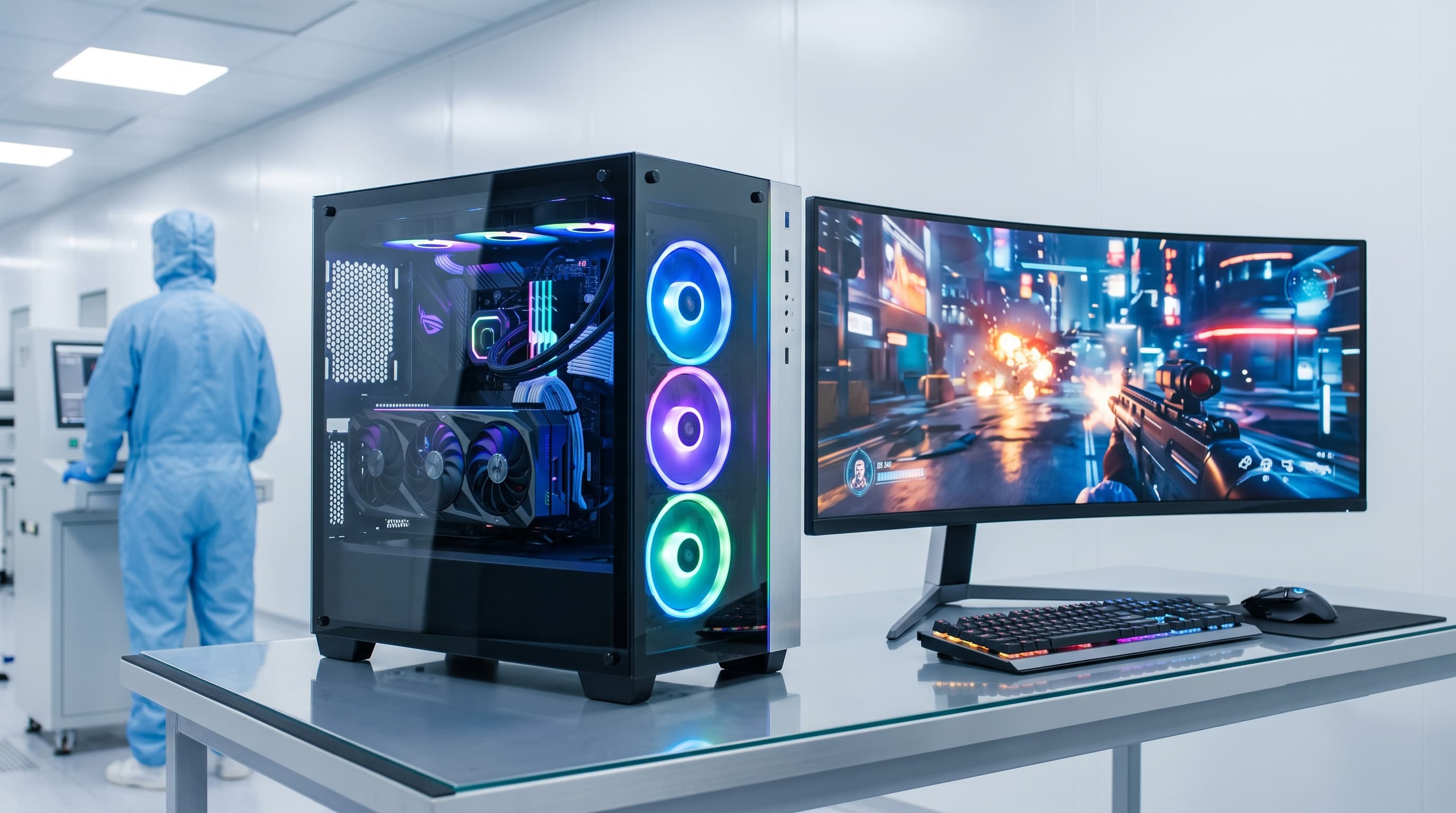
A Graphics Processing Unit (GPU) is a specialized electronic circuit designed to rapidly manipulate and alter memory to accelerate the creation of images in a frame buffer intended for output to a display device. In simpler terms, it is the hardware component responsible for rendering everything you see on your computer screen, making it critical for gaming, design, video editing, and complex visual workflows.
While CPUs (Central Processing Units) handle general computational tasks, the GPU excels at parallel processing, allowing it to perform thousands of mathematical calculations simultaneously. This parallel architecture is what enables smooth frame rates in modern video games and fast rendering speeds in professional video and photo editing applications like Adobe Premiere Pro and Photoshop.
What is a Graphics Processing Unit (GPU)?
Computer systems implement graphics processing in different ways. Depending on the motherboard architecture and hardware configuration, a computer may use one or both of the following types of GPUs:
- Integrated GPU (iGPU)
- Dedicated GPU (dGPU)
History and Evolution of GPU Technology
Before dedicated graphics chips were developed, early computers relied on the CPU to render visual displays. In the late 1940s and 1950s, early display systems utilized cathode-ray tubes (CRTs) to display basic text and vector graphics. By the 1980s, computer science had advanced significantly, leading to innovations like the Pixel-Planes technology developed at the University of North Carolina, which assigned dedicated processing nodes to individual pixels, laying the foundation for parallel rendering.
The Gaming Era and GPU Standardization
The rapid rise of the video game industry in the 1990s acted as a major catalyst for graphics hardware acceleration. In 1994, Sony popularized the term "GPU" with the launch of the original PlayStation console, which integrated the Geometry Transformation Engine (GTE) to process 3D polygons. By 1995, add-in graphics cards from companies like 3dfx Interactive (with the Voodoo chipset) entered the consumer PC market, proving that dedicated hardware accelerators were essential for 3D gaming.
NVIDIA and the Birth of Modern GPUs
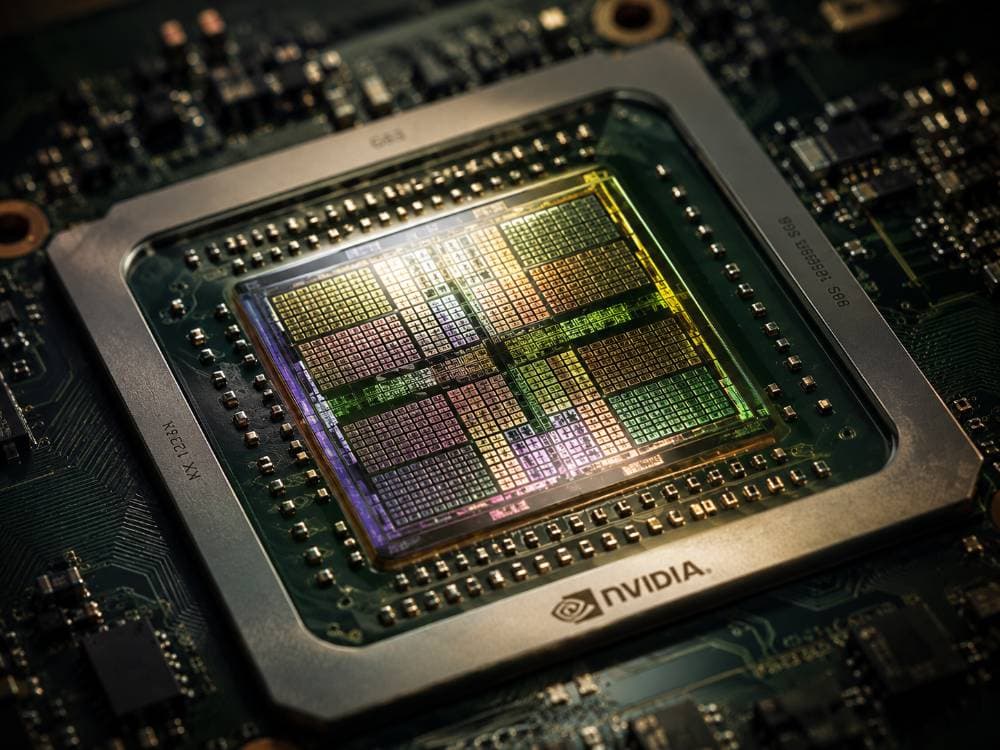
In 1999, NVIDIA revolutionized the computer hardware industry by releasing the GeForce 256, which the company officially defined as the world's first single-chip Graphics Processing Unit. NVIDIA specified that a true GPU must contain dedicated engines for coordinate transformation, lighting (T&L), triangle setup, and pixel rendering, capable of processing at least 10 million polygons per second. This milestone established NVIDIA as a dominant force in graphics technology, a position it continues to hold today.
About NVIDIA Corporation
NVIDIA Corporation (NASDAQ: NVDA) is a global semiconductor leader and the premier supplier of high-end graphics processing units. Headquartered in Santa Clara, California, NVIDIA commands a massive share of the discrete GPU market. Unlike standard CPUs, NVIDIA's GPUs are optimized for compute-heavy workloads, making them the preferred hardware for gaming, professional rendering, Artificial Intelligence (AI), and Machine Learning (ML) research.
Why Parallel Processing Matters
The core advantage of a GPU over a CPU lies in its architectural design. A CPU is designed for serial processing, utilizing a few highly optimized cores to execute tasks one after another. In contrast, a GPU features a highly parallel architecture containing thousands of smaller, efficient cores designed to process multiple tasks simultaneously. This makes GPUs exponentially faster at rendering complex 3D scenes, training deep learning neural networks, and processing large datasets.
NVIDIA Product Portfolios
To serve different segments of the market, NVIDIA offers several specialized product lines:
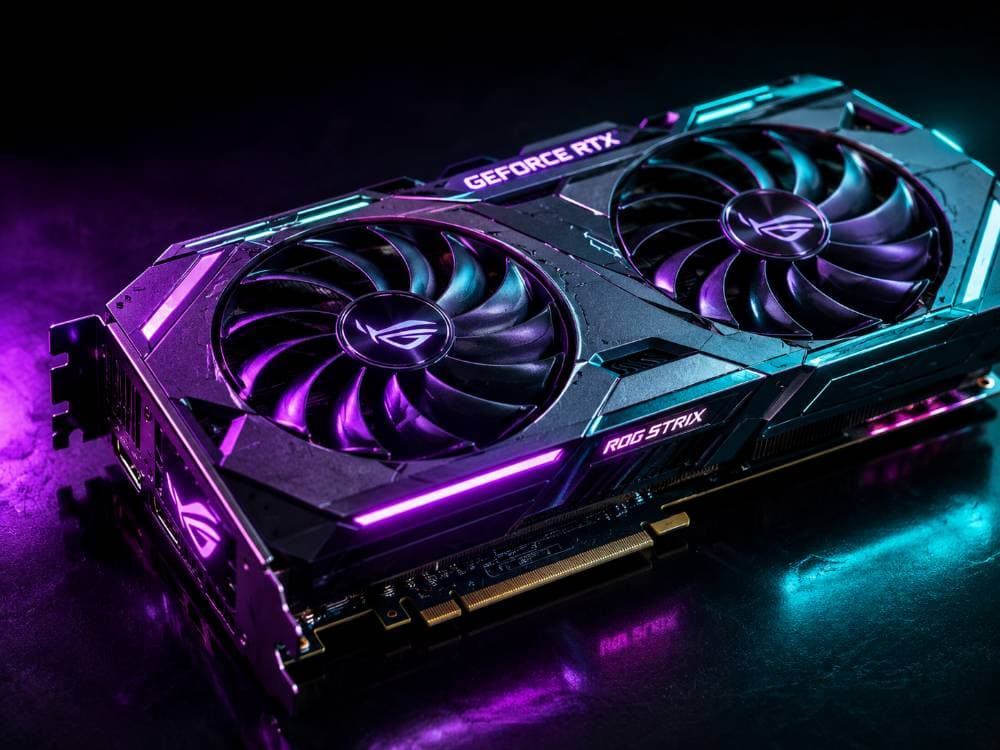
- GeForce GTX & RTX Series: Tailored for mainstream and enthusiast PC gaming, creative workflows, and video editing.
- NVIDIA A & H Series (and DGX Systems): Specialized data center and enterprise GPU clusters engineered for AI training and scientific computing.
- NVIDIA Tegra Series: Energy-efficient system-on-chips (SoCs) designed for automotive systems, mobile devices, and handheld consoles (e.g., Nintendo Switch).
- NVIDIA Mellanox & Networking: Integrated SmartNICs and InfiniBand architectures optimized for high-throughput cloud database and deep learning structures.
- CUDA Ecosystem & Drive Platforms: Software architectures for developer compilation, with Drive specifically targeting autonomous driving systems.
Types of GPUs: Integrated vs. Dedicated
1. Integrated GPU (iGPU)
An integrated GPU is built directly onto the same silicon die as the CPU. Because it shares the main system RAM (System Memory) instead of utilizing dedicated video memory, it is highly energy-efficient and generates very little heat. While an iGPU is perfect for everyday tasks like web browsing, office productivity, and streaming high-definition video, it lacks the raw processing power and memory bandwidth required for high-end gaming or professional 3D rendering.
2. Dedicated GPU (dGPU / Discrete GPU)
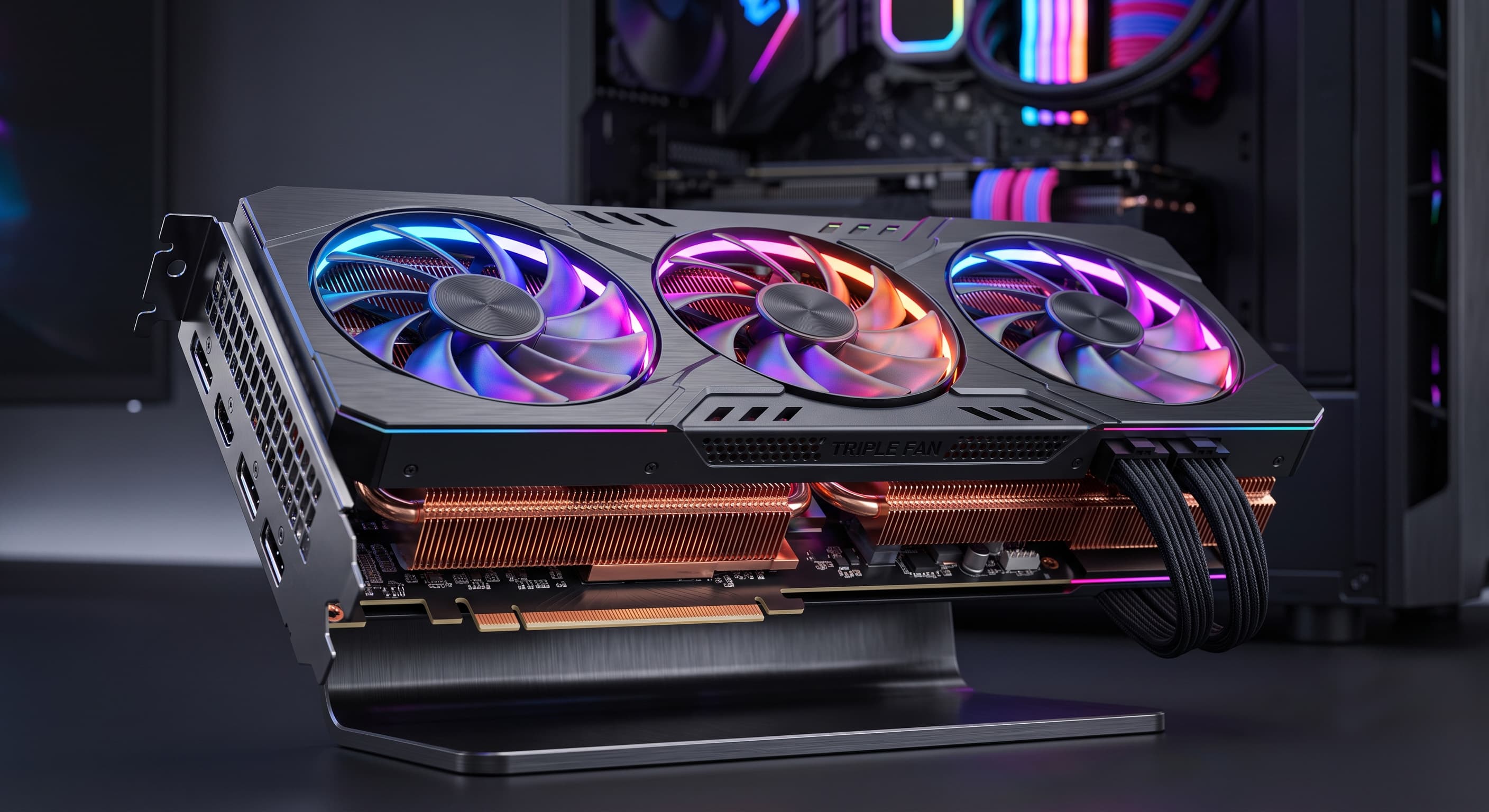
A dedicated GPU is a completely separate hardware component mounted on its own printed circuit board, equipped with its own high-speed Video RAM (VRAM) and cooling system. Because it has dedicated memory resources (such as GDDR6 or HBM), it does not draw from the system's main RAM, providing maximum performance for graphics-intensive applications.
However, because of its high processing capabilities, a dedicated GPU consumes more power and generates substantial heat under load. As a result, systems with dedicated GPUs require robust cooling systems (fans, heatsinks, or liquid cooling) to prevent thermal throttling and ensure stable operation during heavy rendering or gaming sessions.