


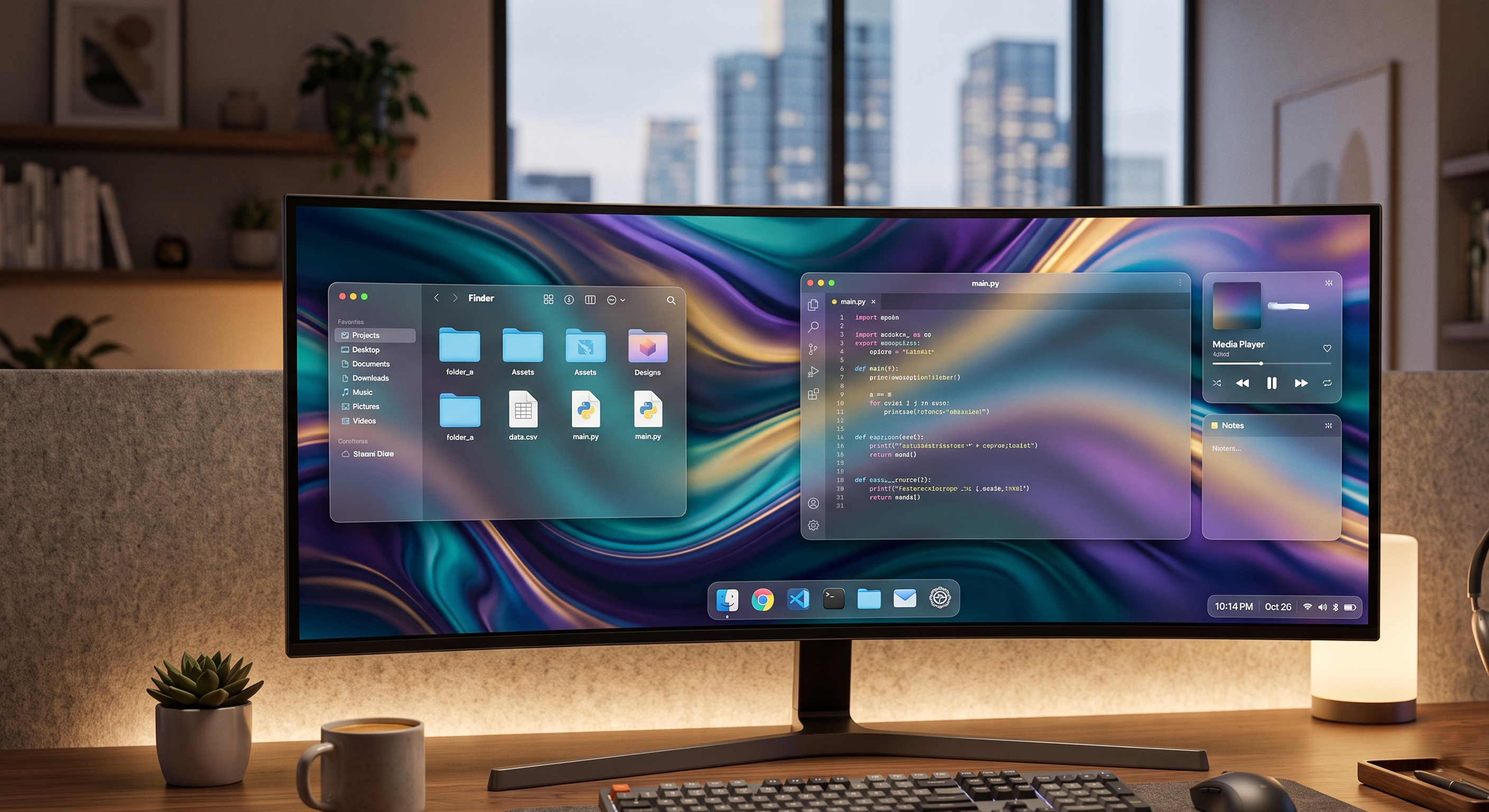

Microsoft Windows has shaped the modern digital computing landscape for billions of users worldwide over the past few decades. Windows is deployed in offices, schools, colleges, government organizations, and homes today, playing an essential role in global technology development.
What is Microsoft Windows?
Developed by Microsoft, Windows is one of the world's most well-known operating systems. An operating system (OS) is the software that manages a computer's hardware and software resources, providing a user-friendly environment. Windows handles essential tasks such as file organization, program execution, internet connectivity, device management, and security. Its Graphical User Interface (GUI) uses visual elements like icons, menus, and windows for easy navigation. Over the years, versions like Windows XP, Windows 7, Windows 10, and Windows 11 have brought improved security and speed, making it the most popular operating system for personal and corporate use.
How Windows Started
The story of Windows began in the 1980s. Before Windows, personal computers ran on MS-DOS, which relied entirely on a text-based Command Line Interface. Because users had to memorize specific keyboard commands, computers were difficult for the general public to use. To solve this, Microsoft developed a new system featuring a Graphical User Interface.
In 1983, Microsoft announced a new graphical environment named Windows, releasing Windows 1.0 in November 1985. It was not a standalone operating system but a shell running on top of MS-DOS, allowing users to navigate using a mouse, drop-down menus, and window panes. Windows 2.0 followed in 1987, introducing overlapping windows. In 1990, Windows 3.0 (and 3.1) was released, becoming a massive global success.
In 1995, Microsoft launched Windows 95, which represented a huge leap forward. Windows 95 introduced elements we still use today, including the Start Menu, the Taskbar, and Plug and Play hardware support. This release solidified Windows as the dominant desktop operating system in the world.
Popular Versions of Windows
Since 1985, Microsoft has updated Windows with new features and simplified interfaces. Several versions stand out as milestones in computer history:
Windows 95 (1995)
Windows 95 was a revolutionary release that introduced a 32-bit architecture and a complete graphical user interface. This version simplified computing for everyday consumers, creating the foundation for modern desktop interfaces.
Windows 98 (1998)
Windows 98 built on the success of Windows 95, offering improved support for USB devices, web browsing integration, and system stability. It became a staple operating system in schools, offices, and homes during the late 90s.
Windows XP (2001)
Released in 2001, Windows XP is widely regarded as one of Microsoft's most popular and durable operating systems. With its clean blue-and-green aesthetic, fast performance, and rock-solid stability, it won the hearts of users worldwide, remaining active in many institutions for over a decade.
Windows Vista (2007)
Windows Vista introduced a beautiful glass-like design called Aero Glass and enhanced security frameworks. However, because it required very powerful hardware to run smoothly, it faced performance issues on older PCs and was less popular than Windows XP.
Windows 7 (2009)
Windows 7 corrected the performance flaws of Windows Vista, offering a fast, reliable, and user-friendly experience. It quickly became the dominant operating system worldwide for corporate offices, education, and home computers.
Windows 8 and Windows 8.1 (2012–2013)
To address the rise of tablets and touchscreens, Microsoft designed Windows 8 with a tile-based touch interface. However, the removal of the classic Start Menu was unpopular, prompting the release of Windows 8.1 which restored key desktop features.
Windows 10 (2015)
Windows 10 offered a middle ground, combining the familiar desktop style of Windows 7 with the modern application capabilities of Windows 8. It brought virtual desktops, the Microsoft Edge browser, and regular cloud updates, becoming the standard OS for home and business users.
Windows 11 (2021)
Windows 11 is the latest release from Microsoft. It features a centered Start Menu, rounded corners, enhanced window snapping (multitasking), integrated gaming features, and modern security protocols designed for hybrid working environments.
The Impact of Microsoft Windows on the World
Windows has played an active role in shaping the modern digital landscape by making computer systems accessible to everyone.
Windows Made Computing Accessible to Everyone
As Windows grew in popularity during the 1980s and 90s, personal computers expanded rapidly into homes. Visual elements like a mouse, icons, and menus meant that users did not need coding knowledge to operate a computer, bringing digital literacy to the general public.
A Revolution in Education
Educational institutions around the world adopted Windows to run educational software, type reports, perform research, and teach digital skills. This has established a foundation for computer education that continues today.
Supporting the Corporate World
From small local shops to massive multinational enterprises, Windows is the standard operating system for processing documents, managing accounts, communicating, and planning. It has drastically increased business productivity globally.
Growth of the Software Industry
By providing a stable platform for third-party developers, Windows accelerated the growth of the software industry, paving the way for applications in graphic design, engineering, science, and administration.
Powering the Gaming Industry
Windows DirectX technology allowed game developers to create games with rich, high-performance graphics. This established Windows as the leading platform for PC gaming, driving a multi-billion dollar global industry.
Popularization of Internet Usage
During the mid-90s, Windows helped popularize the internet by bundling user-friendly web browsers and email clients, laying the foundation for modern social media, e-commerce, and online communication.
Job Creation and IT Employment
The dominance of Windows created a massive demand for IT professionals, including system administrators, network engineers, software developers, and technical support staff, building millions of careers worldwide.